







Life inside your home feels loud. Keys vanish into thin air. Thoughts race at a hundred miles an hour. You look at your son or daughter and see a mirror. Biology drives the chaos.
The Genetic Bond
Science confirms what many families suspect. ADHD runs deep in families. ADHD can be genetic. Its heritability is estimated at 77–88%. If a parent has the condition, the chance of passing the trait down is significant. Such a strong connection means your family environment is not just about personality quirks. It is about neurobiology.
Your brains likely share a distinct trait. Scientists call it "hypo-dopaminergic". Simply put, the brain chemistry regulating motivation and reward works differently for you both. You might crave stimulation or struggle to start boring tasks because your dopamine pathways need a stronger spark to get going. Knowing the biology helps remove the guilt. You are not a bad parent. Your child is not "naughty" on purpose. You are both navigating a world designed for a different type of operating system.
The Empathy Superpower
Sharing a diagnosis comes with a hidden advantage: deep, intuitive empathy. A neurotypical parent might look at a messy bedroom and see laziness. You see a brain that got overwhelmed with too many steps. When your child loses their jumper for the third time in a British winter, you understand the frustration because you just spent ten minutes hunting for your car keys.
Compassion becomes your parenting superpower. Evidence suggests harsh parenting may predict greater ADHD symptoms. Your ability to "get it" allows you to react with patience instead of anger. You can model resilience. When you make a mistake, admit the error. Show your child how to fix the problem without shame. Such moments teach them that perfection is not the goal; adaptation is.
The Mirror Effect
Watching your child struggle can feel painful. It often triggers memories of your own childhood challenges at school. You might see them staring out the window during maths homework and feel a knot in your stomach. It reminds you of the times teachers told you to "just try harder."
Psychologists call it the "mirror effect." Seeing your own traits reflected in your child can be triggering. It might cause you to overreact because you want to protect them from the pain you experienced. Recognising the reaction is the first step. Remind yourself that your child has a different path. They have you. You had to figure it out alone, but they have a guide who knows the terrain.
When Storms Collide
Emotional regulation is often the hardest part of ADHD. We often talk about focus, yet the ability to manage big feelings affects daily life even more. ADHD brains often struggle to hit the brakes on emotions. Happiness feels like euphoria; frustration feels like rage.
When both parent and child have ADHD, you risk a phenomenon called "emotional contagion." Your child has a meltdown because the toast is the wrong shape. Your stress levels spike instantly. Your brain reacts to their shouting as a threat, sending you into fight-or-flight mode. Suddenly, two people are shouting, and nobody is listening.
Breaking the cycle requires a pause. It is okay to step away. Tell your child, "My brain is feeling a bit full right now. I need two minutes in the garden to cool down." Doing so models a vital skill. It shows them stepping away to regulate is smart, not weak.
The Art of Body Doubling
ADHD brains often struggle to start tasks. The laundry pile looks like a mountain. The homework sheet looks like a foreign language. A simple psychological trick can help you both: Body Doubling.
The concept is simple. We work better when someone else is present. The other person does not need to help or even talk. Their presence acts as an anchor. It provides a quiet accountability, keeping the ADHD brain on track.
Use body doubling to your advantage.
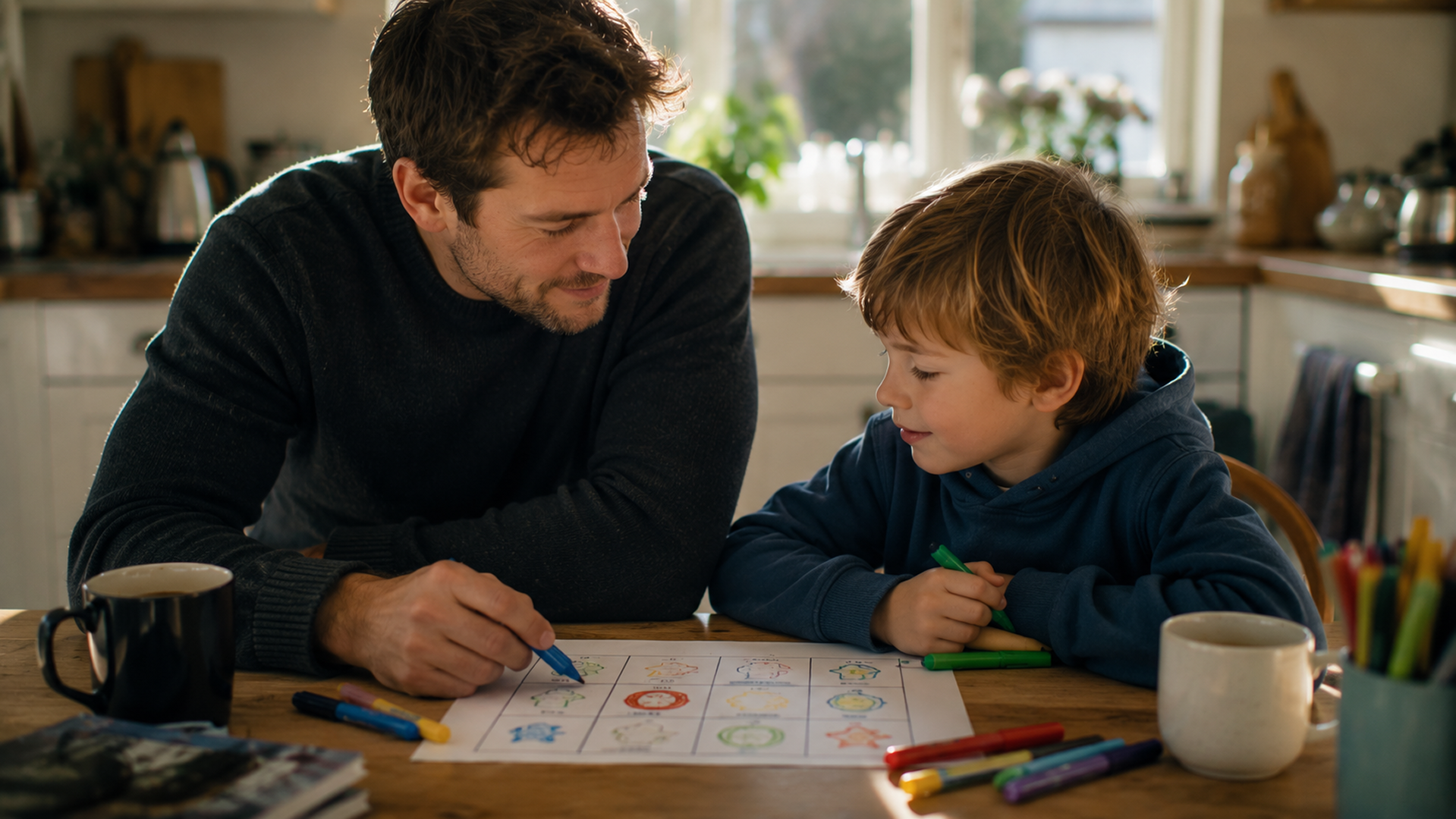
- Homework Hour: Sit at the kitchen table with your laptop while your child does their schoolwork. You pay bills; they do maths.
- Tidy Up Time: You fold clothes in their room while they put away toys.
Working alongside each other turns a chore into a shared moment. It reduces the isolation of the task. Plus, it gives you a chance to praise them for sticking with it.
Dopamine Hunting
Your brain craves dopamine. Without it, boredom feels physically painful. Many household battles start because a task feels too boring to tolerate. The solution? Inject dopamine into the routine.
- Music: Create a high-energy playlist for the morning rush. Racing to get shoes on before the song ends turns a stressful moment into a game.
- Gamification: Turn chores into a challenge. "Can we clear the table in under three minutes?"
- Novelty: Change things up. If homework is a struggle at the desk, try doing it under the table with a torch.
Recognise that your child seeks stimulation. If they are bouncing off the walls, they are not trying to annoy you. Their brain is hunting for dopamine. Direct that energy into something positive, like a quick dance break or a wrestle on the carpet.
The "Doom Box" and the Launchpad
Traditional organising advice rarely works for us. We put things in a drawer and forget they exist. Object permanence is a real struggle. Instead of fighting it, adapt your home to your brain.
Stop trying to organise like a minimalist. Embrace the "Doom Box." When a room gets messy, sweep everything into a basket. It clears the visual clutter instantly. You can sort through the basket later when you have the mental energy. It stops the mess from becoming overwhelming.
Mornings often cause the most stress. Create a "Launchpad" near the front door.
- Hooks: Install plenty of hooks for coats and school bags. Hangers are often too much fiddling for an ADHD brain.
- Open Baskets: Use bins for shoes, gloves, and hats. Seeing the items helps prevent them from being lost.
- Chargers: Keep a charging cable right there for devices.
The rule is simple: items leaving the house must live on the Launchpad. It saves you from the frantic 8:30 am panic.
Forgiveness is Key
Some days will go wrong. You will lose your temper. They will forget their PE kit. You will burn the dinner because you got distracted. It happens.
The most important thing you can give your child is not a perfectly organised home. It is self-compassion. Let them see you forgive yourself. Say out loud, "Oops, I forgot the appointment. That is annoying, but I can fix it."
You are teaching them how to treat themselves when they inevitably slip up. You are showing them that a mistake is not a character flaw. It is just a moment.
Moving Forward Together
Parenting with ADHD is intense, exhausting, and wonderfully colourful. You share a unique bond. You speak the same secret language of rapid-fire thoughts and deep passions. You understand their struggles because you have lived them.
Lean into the connection. Celebrate the creativity and the energy. Support each other through the hard days. You are not broken. You are a team. Together, you can navigate a world demanding order with your own brand of brilliant chaos.
When extra help is needed, support is not a sign that the family has failed. For UK families, a useful route is to speak with the child's teacher, SENCO or school nurse about classroom and homework adjustments, and to contact the GP or ADHD service if symptoms are causing significant impairment. NICE NG87 recommends practical environmental changes, ADHD-focused parent-training or education where appropriate, and specialist-led treatment planning. Depending on age and need, this may include structured psychological support, CBT-informed work on problem-solving and emotional regulation, and medication started and monitored by an ADHD specialist. Parents with ADHD may also benefit from adult ADHD support around workplace adjustments, routines, medication review, and coaching or psychological strategies.
Summary
Parenting when you share a diagnosis brings unique intensity and a beautiful connection. Biology drives the challenges, but empathy fuels the solutions. You may share a neurobiological craving for interest and novelty, and both of you may struggle with boredom.
Build a home environment that respects your brain. Use body doubling, create launchpads, and prioritise forgiveness. You are not just raising a child; you are guiding a fellow traveller. You are a team. Together, you can navigate the world with resilience and love.
References and support sources: