








Family life shifts the moment an ADHD diagnosis arrives. Suddenly, the household’s energy pivots toward managing appointments, mediating conflicts, and navigating the rollercoaster of neurodivergence. But amidst the chaos, a quiet struggle often unfolds in the background. The neurotypical brother or sister watches, adapts, and sometimes, fades into the woodwork. How do we support everyone when one child’s needs seem to fill every room?
The Phenomenon of the "Glass Child"
Have you ever heard the term "Glass Child"? It sounds fragile, like something about to break, but the meaning is actually quite different. It refers to siblings of children with high-needs conditions, including ADHD. People look right through them to see the brother or sister with the diagnosis. It’s a powerful, heartbreaking image. These kids aren't fragile; in fact, they’re often forced to be incredibly tough.
In many homes, the neurotypical sibling adopts the role of the "easy one." They see their parents stressed, exhausted, and pushed to the limit, so they make a silent pact with themselves: I will be no trouble. They suppress their own needs. They hide their struggles with homework or friends because, compared to a public meltdown or a school suspension, their problems seem small.
This flight into perfectionism is a survival strategy. But suppressing needs doesn't make those needs disappear. Over time, silence transforms into resentment. Adult siblings often reflect on their childhoods not with anger at the brother or sister, but with a deep sadness about having their own emotional lives put on hold. They felt like spectators in their own families, watching the "tyranny of the urgent" dictate every weekend plan and holiday dinner.
It’s crucial to recognize that the impact isn't just emotional; it’s measurable. Research from the National Institutes of Health (NIH) indicates that siblings in these families report lower satisfaction with family life and even face increased risks for anxiety and depression later on. The goal isn't to blame parents—who are often suffering from "combat fatigue"—but to shine a light on the child standing quietly in the corner.
It’s Not Malice, It’s Chemistry
Why do they fight so much? If you’re asking that question, you aren't alone. Sibling conflict in ADHD households can feel relentless, explosive, and personal. But often, the driver isn't jealousy or hatred. It’s dopamine.
The ADHD brain is chronically under-stimulated. It has a deficit of dopamine, the neurotransmitter responsible for reward and focus. To fix that low-dopamine state, the brain seeks stimulation. Positive stimulation, like a challenging video game or a sport, works well. But negative stimulation works even faster.
Conflict is highly stimulating. A screaming match, a dramatic argument, or pestering a sibling until they explode releases a rush of adrenaline and dopamine. It’s a chemical "fix." The child with ADHD isn't necessarily trying to be mean; their brain is hunting for a resource it lacks. They might poke, prod, or annoy their sibling because, subconsciously, a big reaction feels better than feeling nothing.
Understanding that dynamic changes everything. When the neurotypical sibling realizes, "He isn't doing it because he hates me; his brain is just bored and looking for a jumpstart," it takes the sting out of the interaction. It shifts the narrative from victimization to biology.
That explanation should be held with care. Dopamine-seeking is a useful psychoeducational model, not an excuse for unsafe or hurtful behaviour. Parents can validate the ADHD child's need for stimulation while still setting clear boundaries, repairing harm, and protecting the sibling's physical and emotional safety.
The Great Fairness Trap
"It’s not fair!"
If you have more than one child, that phrase probably echoes through your hallways daily. In families managing ADHD, the accusation of unfairness usually holds water. You do treat them differently. You might help the ADHD child with homework for an hour while the other works alone. You might let a rude comment slide for one child because you know it was impulsive, while correcting the other.
Kids instinctively equate fairness with equality. They think fairness means everyone gets a size eight shoe. But if one kid has a size six foot and the other has a size ten, giving them both size eights isn't fair; it’s useless.
We need to rewrite the script. The concept you want to teach is equity. Equity means everyone gets what they need to succeed.
Try explaining it like that. Tell them: "Fairness doesn't mean you get the same thing. It means you get what you need. Your brother needs me to sit with him to stay on task. You need me to drive you to soccer practice and cheer for you. I give you both what you need." Research shows that when families explicitly discuss the "fair is not equal" concept, sibling resentment goes down. It validates their perception—yes, things are different—while explaining the why behind the difference.
Creating Safe Harbors
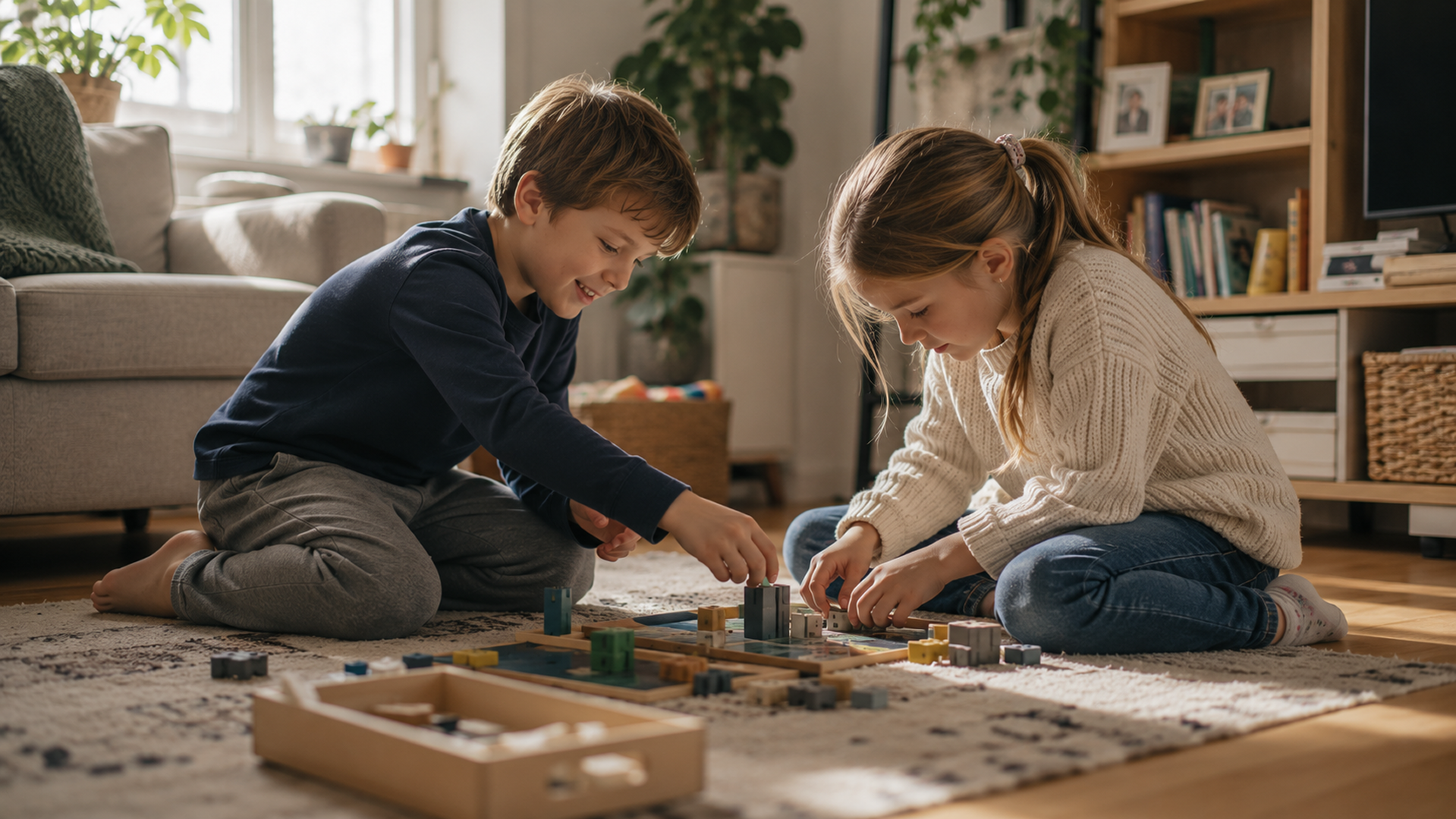
Living with someone who struggles with impulse control can feel like living in a construction zone. Towers of Legos get knocked over. Personal diaries get read. Quiet moments get shattered by sudden shouting. The neurotypical sibling often feels they have no territory that is truly theirs.
Physical boundaries are vital. If the ADHD child cannot stop themselves from borrowing (or breaking) things, a lock on a bedroom door isn't a punishment; it’s a tool for peace. It gives the sibling a sanctuary. It sends a message: Your space matters. Your things are safe.
But emotional safety matters just as much. We often inadvertently recruit the "easy" child to be a third parent. We ask them to "be the bigger person" or to "just ignore it" when their sibling is aggressive. While well-intentioned, asking a child to act like an adult is a heavy burden. It’s called parentification.
Instead of asking them to manage the chaos, give them permission to escape it. Let them know it is okay to walk away, to put on noise-canceling headphones, or to go to a friend’s house when the atmosphere at home gets too heated. You want them to be a sibling, not a caregiver.
The Power of One-on-One Time
So, how do we fix the "Glass Child" problem? The antidote to invisibility is visibility.
It doesn't require expensive vacations or grand gestures. It requires minutes. Ten to fifteen minutes of dedicated, protected time each day can refill a child’s emotional cup. But there is one catch: during that time, you cannot talk about the sibling, the diagnosis, or the logistical fires you are putting out.
Talk about their art project. Talk about the video game they love. Ask about the drama in the school cafeteria. For those fifteen minutes, they are the center of the universe. They aren't the "helper" or the "sibling of the kid with ADHD." They are just themselves.
Empirical studies suggest that the emotional health of the primary caregiver is the biggest factor in family well-being. But the second biggest factor might just be the strength of these individual connections. When a child feels seen by their parents, they become more resilient. They can handle the unequal attention and the chaotic mornings because they know their value to you is secure.
A New Perspective
The story of the sibling isn't all negative. We often focus on the risks: the anxiety, the resentment, the bullying. But there is another side to the coin.
Siblings raised in these environments often develop a profound capacity for empathy. They learn early on that people’s brains work differently. They develop a "Theory of Mind", the ability to understand another person's perspective, much earlier than their peers. They become the kids on the playground who stand up for the outcast because they know what it feels like to be misunderstood.
Many adults who grew up with an ADHD sibling report that, while childhood was hard, it made them tolerant, flexible, and compassionate people. They learned to roll with the punches. They learned that "normal" is a myth.
Moving Forward
The goal isn't to create a perfect, conflict-free home. That doesn't exist. The goal is to make sure every person in the house feels safe and significant.
Start small. Acknowledge the difficulty. Validate their feelings when they scream, "It’s not fair!" instead of correcting them immediately. Say, "I know it feels that way. I know it’s hard." Sometimes, just having their reality witnessed is enough to lower the temperature.
Protect their space. Explain the brain chemistry. And most importantly, look at them. Really look at them. Don't let them be glass. Let them be seen.
For UK families, extra support is appropriate if a sibling becomes persistently anxious, withdrawn, resentful, sleep-deprived, or starts taking on adult responsibilities. Speak with the school SENCO, pastoral lead or school nurse, and consider contacting the GP, local family hub, young carers service, or the child's ADHD/CAMHS team. Family work, parent-training, sibling support, and practical school adjustments can help protect every child's wellbeing while the ADHD child's needs are being met.
Navigating family life with a neurodivergent child is a marathon, not a sprint. There will be bad days. There will be meltdowns. But through honest conversation and intentional connection, you can build a family dynamic where every child, regardless of their brain wiring, knows they have a place where they belong.
Summary
Sibling dynamics in ADHD households are complex. The neurotypical child often becomes a "Glass Child," feeling invisible as parents manage the squeaky wheel. Conflict is often driven by the ADHD brain’s need for dopamine, not malice. To help, parents should explain that "fair is not equal", protect the sibling’s physical space, and guarantee daily one-on-one time where the diagnosis is never mentioned. With support, these siblings can grow into deeply empathetic adults.
References and support sources:
- NHS. ADHD in children and young people.
- NICE. Attention deficit hyperactivity disorder: diagnosis and management (NG87).