








Ever feel like your brain is a high-performance sports car with a flat battery? You put your foot down, but the engine just sputters. For many, that’s the daily reality of ADHD. It isn't a lack of willpower; it’s a biological glitch in the fuel lines. Science points a massive, flashing neon arrow at one particular chemical: dopamine.
The Dopamine Dilemma
Dopamine acts as the brain's chief messenger for motivation, focus, and that sweet feeling of reward. In a neurotypical brain, messages zap across the gaps between neurons—synapses—smoothly. But in an ADHD brain, things get tricky.
The issue isn't always that you aren't producing enough dopamine. Often, the problem lies in how quickly it gets recycled. Imagine pouring water into a bucket with a hole in the bottom. If the hole is too big, the bucket never fills up. In the ADHD brain, proteins called "transporters" work overtime, vacuuming up dopamine before it has a chance to deliver its message.
Another hurdle? The receptors might be less sensitive. Genetic variations, like the DRD4-7R gene, can mean your brain needs a much louder "shout" of dopamine to register a signal that others hear as a whisper.
So, how do we turn up the volume without relying solely on medication?
The Protein Connection
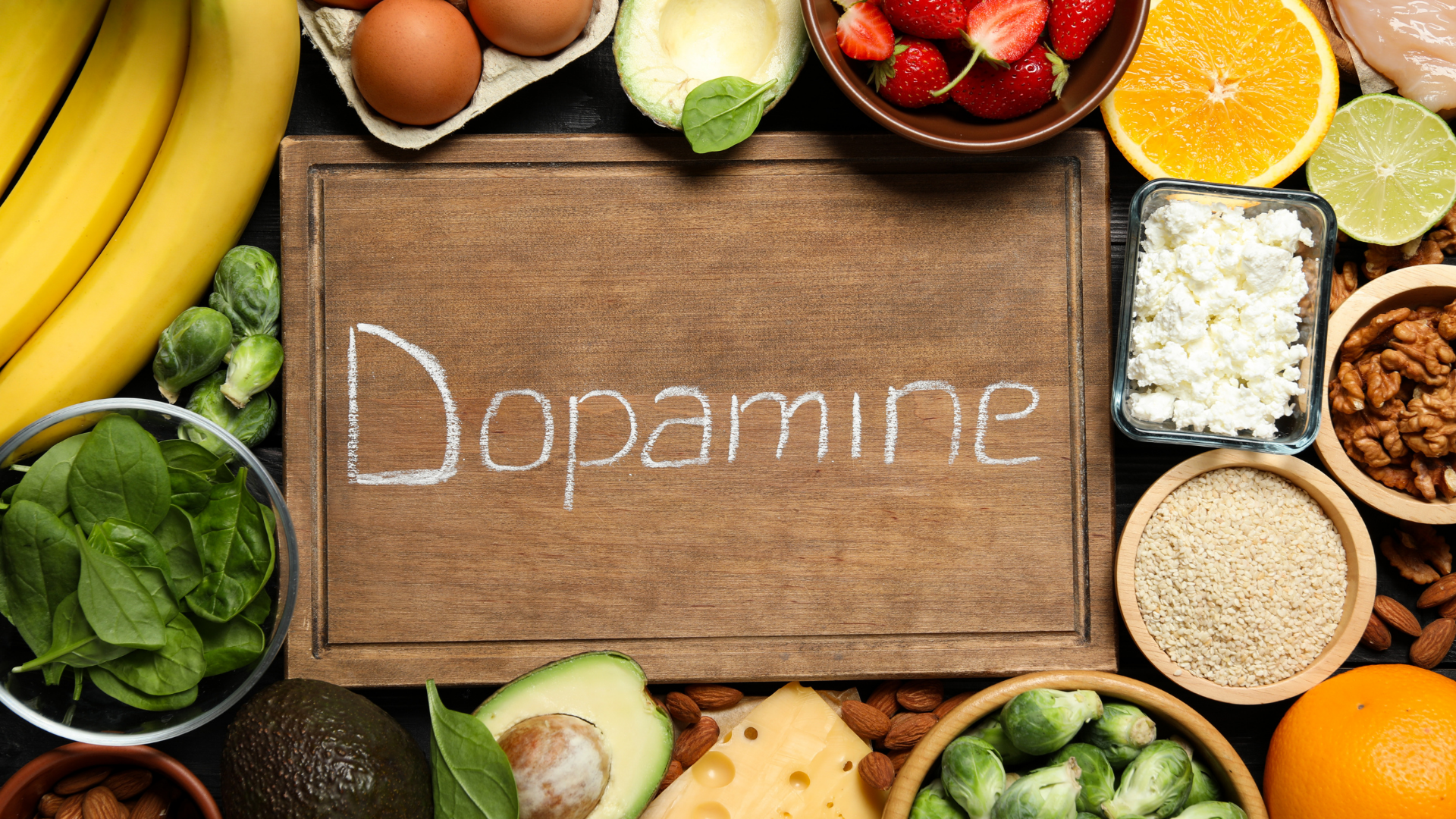
Your body builds dopamine from scratch using raw materials found in food. The star player here is an amino acid called L-Tyrosine, which your body creates from another amino acid, Phenylalanine.
Think of Tyrosine as the steel used to build a skyscraper. Without steel, construction stops. Studies show that a breakfast high in protein prevents the mid-morning crash so common in ADHD. One study found that a protein-rich meal of skyr and oats boosted concentration significantly more than a carb-heavy breakfast.
Why? Carbohydrates can spike blood sugar, leading to a crash that fogs the brain. Protein provides a steady supply of Tyrosine to the brain's entryway—the blood-brain barrier. Here’s the catch: Tyrosine competes for entry with other amino acids. A high-protein, low-sugar start gives Tyrosine a VIP pass, helping to keep dopamine levels stable throughout the morning.
Actionable Tip: Aim for foods like eggs, tuna, beef, or pumpkin seeds first thing. A simple switch from cereal to an omelette could set a completely different tone for the day.
Iron, Zinc, and Magnesium
Having the raw materials isn't enough. You need workers to assemble them. Enzymes are the biological factory workers that turn Tyrosine into dopamine, and they can't function without specific tools: minerals.
Iron is non-negotiable. The enzyme tyrosine hydroxylase—the rate-limiting step in dopamine synthesis—depends entirely on iron to work. If your iron stores (ferritin) are low, dopamine production throttles down. Research consistently shows that children with ADHD often have lower ferritin levels. Bringing these levels up can reduce symptoms.
Zinc is another heavy hitter. It helps regulate dopamine transport and improves how receptors bind to the chemical. In fact, some studies suggest that adequate zinc levels can make stimulant medication more effective, potentially allowing for lower doses.
Magnesium calms the nervous system. While it doesn't build dopamine directly, it supports the release mechanism. Plus, it helps with sleep—a chronic struggle for the ADHD community. The "glycinate" form is often preferred for its calming properties over "citrate," which acts more on the digestion.
A Vital Warning on Timing:
Here is where many slip up. You cannot just pop all these supplements together. Iron is a bit of a diva; it hates competition. If you take iron with zinc, dairy (calcium), or even a cup of tea (tannins), absorption plummets—sometimes by over 60%. To get the benefits, space them out. Take iron in the morning with Vitamin C (which helps it absorb), and save zinc or magnesium for the evening.
Omega-3s
Your brain is mostly fat. The quality of that fat determines how well your neurons communicate. Omega-3 fatty acids, specifically EPA (eicosapentaenoic acid), keep the cell membranes flexible. Fluid membranes allow dopamine receptors to snap into the right shape to catch signals.
A study indicated that omega-3 fatty acid supplementation may confer beneficial effects on several cognitive domains, including perceptual speed, language ability, primary memory, visuospatial functions, and overall cognitive performance. You aren't looking for just any fish oil. Evidence points to a daily intake of 1–2 grams, with a high ratio of EPA (over 400mg) being the sweet spot. It takes time, though; don't expect miracles overnight. It usually takes about three months of consistent use to see the full benefits.
Water Therapy
Ready for something a bit more radical? Cold water immersion might be the most potent natural dopamine booster available.
We aren't talking about a chilly splash. We mean immersing your body in water around 14°C (57°F). It sounds torturous, yet the physiological payoff is immense. Research indicates that this cold shock triggers a release of norepinephrine (which boosts alertness) by 530% and dopamine by 250%.
Unlike the spike you get from sugar or caffeine, which comes with a nasty crash, the dopamine rise from cold water is sustained. It stays elevated for hours, providing a long-lasting "hum" of focus and mood elevation.
You don't need to live in an ice bath. Protocols suggest that just 11 minutes of cold exposure per week—divided into a few sessions—is enough to trigger these metabolic changes. A cold shower in the morning, gradually increasing the duration, can act as a powerful reset button for a sluggish dopamine system.
Not All Exercise is Equal
Everyone knows exercise is good for you. But for the ADHD brain, it acts as a natural medication. It increases blood flow to the prefrontal cortex—the CEO of the brain—and releases a cocktail of catecholamines.
However, the type of exercise yields different results.
Aerobic exercise (running, cycling, swimming) is fantastic for "tonic" dopamine, raising the baseline level. Just 30 minutes of moderate cardio can improve executive function immediately afterwards.
Open-skill exercises offer a different benefit. These are activities where the environment changes constantly, requiring you to react—think tennis, martial arts, or football. Because you have to make split-second decisions and inhibit impulsive reactions, these sports train the brain's "brakes." Studies show open-skill activities are superior for improving inhibitory control.
So, if you struggle with impulsivity, a martial arts class might serve you better than a treadmill. If you need a mood lift and general focus, a jog does the trick.
Tune in to Nature and Noise
Finally, look at your environment. The ADHD brain is often overstimulated by the "noise" of modern life—traffic, pings, cluttered visuals. This drains your "directed attention" battery.
Green Time: Nature offers a cure. The "Attention Restoration Theory" suggests that natural environments engage a different kind of attention: fascination. Watching leaves rustle or water flow is effortless. It allows your directed attention to recharge. Just 20 minutes in a green space can rival medication for temporary symptom relief.
Brown Noise: While silence can be deafening for a racing mind, the right kind of noise acts as a blanket. You might have heard of white noise, but "Brown noise" (lower frequency, rumbling sounds like heavy rain or waterfalls) is gaining traction. The theory of "Stochastic Resonance" suggests that a certain level of background noise boosts the detection of weak neural signals. For a dopamine-starved brain, adding this static can help push the signal above the threshold, making it easier to focus.
The Bottom Line
ADHD is complex. No single kale smoothie or morning run will "fix" it. Yet, the science is clear: the brain is pliable. Through feeding it the right precursors (protein), enabling the machinery (iron/zinc), greasing the gears (Omega-3s), and triggering the release (exercise/cold), you can significantly upgrade your mental chassis.
Start small. Maybe tomorrow you can swap the toast for eggs. Perhaps you brave a 30-second cold shower. The goal isn't perfection; it's progress.